

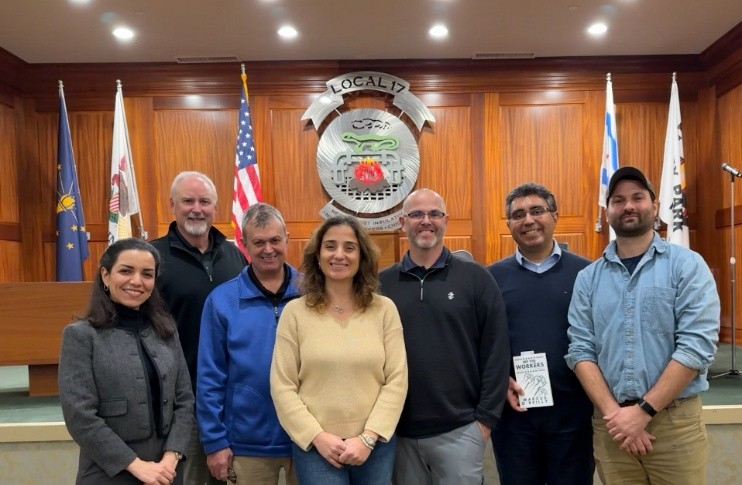
In 2023, Local 17 adopted a new strategy to expand awareness of the mechanical insulation trade. Building on inroads that began with code officials, the Local made a deliberate effort to reach out to universities and encourage research on the importance of mechanical insulation.
As part of that effort, Local 17 contacted several universities in the Chicago, Illinois area in hopes of forming a research partnership. The search did not take long before Local 17 began presenting to an engineering department at the University of Illinois Chicago. During this process, Dr. Karatas met with Local 17 and was surprised by how little information was available about mechanical insulation with respect to research. Recognizing the need to change that, additional meetings followed, and more participants were brought into the effort, including Behzad Esmaeil and Sogand Hasanzedeh of Purdue University.
With willing partners now involved, the research team developed a proposal designed to both introduce the broader community to mechanical insulation and highlight the role of insulators within the industry. The project also aimed to identify potential problems that can occur when mechanical systems are not insulated properly. This led to the creation of Synthesizing Current Challenges in Aging Infrastructure for Mechanical Heat and Frost Insulation: Workforce Challenges in Retrofitting Aging Mechanical Systems from the Heat and Frost Insulators Perspective.
Funded by the International Heat and Frost Insulators, this nearly two-year project was designed to take a broad view across the United States and Canada. Its purpose was to document what union members encounter in the field, including both the strengths of our trade and the challenges they face while performing their work.
The project reflects an important step forward for Local 17 and the mechanical insulation industry. By working with universities and researchers, the Local helped create a stronger platform for public awareness, technical understanding, and future study of the trade. Below is an overview of the survey and conclusions:
This study conducted a survey to explore the challenges faced by the mechanical insulation workforce in retrofitting aging mechanical systems in the U.S. and Canada. The survey collected responses from 369 mechanical insulators, of whom 56% had over 20 years of experience. Respondents primarily worked on industrial insulation (73%), plumbing and piping (72%), and HVAC systems (69%). The salient findings are summarized here:
- Common Challenges: The most frequent issue in aging mechanical systems is the shortage of documentation, followed by mold issues, regulatory challenges, health risks related to hazardous materials, and difficult retrofitting. The ranked frequency of these challenges was consistent across participants in the U.S. and Canada, based on insulator experience level and the types of mechanical systems they worked on
- Documentation: Incomplete or inaccurate historical documentation is a common issue, with 70% of insulators encountering it frequently or occasionally. Due to incomplete or inaccurate historical documentation, 46% of participants experienced a moderate to significant impact on work efficiency. They also require additional time for accurate repairs and upgrades of aging mechanical systems. Moreover, 78% of participants, regardless of their experience level, consider the assistance of experienced insulators to be highly valuable and helpful
- Mold: Half of the insulators reported encountering mold frequently. While mold issues exist in both aging and newer mechanical systems, this issue is more frequent (10% increase) in aging mechanical systems. The primary concerns related to mold are health risks (72%) and insulation material degradation (67%). Mold is reported to be encountered by insulators more frequently in the U.S. (58%) than in Canada (32%). Furthermore, insulators working on refrigeration and HVAC systems face mold most frequently due to high humidity and condensation.
- Regulations: The three most challenging regulations for working on aging mechanical systems are safety regulations (29%), environmental standards (27%), and energy compliance (27%). Environmental compliance is more challenging in the U.S., whereas safety regulations are the primary concern in Canada. Experienced insulators found energy compliance more challenging, while less experienced ones reported greater difficulty with safety regulations.
- Confined Spaces: The top three challenges related to confined spaces are difficulty maneuvering (28%), physical strain (23%), and poor ventilation (22%). Half of the respondents reported that confined spaces significantly impact retrofitting in aging mechanical systems compared to newer ones. Furthermore, 61% noted insufficient safety measures in Collective Bargaining Agreements (CBAs).
- Hazardous Materials: Insulators encounter hazardous materials in both aging and newer mechanical systems, although their frequency is 10% higher on aging ones. Among participants working on aging mechanical systems, 90% reported exposure to hazardous materials, and 30% experienced health issues.
- Noise Issues: Around 60% of mechanical insulators reported higher noise exposure in aging mechanical systems. The top noise-related issues are communication difficulties (80%) and safety concerns (77%).
- Training: The top training needs for working on aging mechanical systems are safety training (38%), retrofitting techniques (32%), and regulatory compliance (28%). Moreover, less experienced insulators emphasize retrofitting skills (38%). Almost 80% of insulators are satisfied with their training. However, 68% of insulators believe additional training is necessary, particularly in handling hazardous materials, improving safety protocols, and understanding aging system designs.
This effort did not end with the findings being shared only locally for dissemination. The research team has also been actively presenting and defending the results at conferences across Europe, Canada, and the United States. These conferences are sponsored by other universities, architectural and engineering societies, as well as companies operating within the construction industry.
This broader engagement demonstrates the significance of the research and its relevance to both academic and professional communities. By participating in these events, the team continues to contribute to ongoing discussions, gain expert feedback, and strengthen the visibility and credibility of the findings on an international scale.
Completed:
- ICMB Conference: International Conference on Moisture in Buildings. (https://icmb25.pt/)
- Paper name: Mold Challenges in Building Mechanical Systems Faced by Mechanical Insulators
- Location: Guimarães, Portugal
- Date: October 23–24, 2025
- Authors: Parisa Salehi, Behzad Esmaeili, Sogand Hasanzadeh, Aslihan Karatas
- Presenter: Charles Pipim, PhD Student.
- Talk at the Build America Center at the University of Maryland titled “Strengthening Resilience and Adaptation in the Built Environment: From Diagnostics to Deployment.”
- Date: March 6, 2026.
- Presenter: Dr. Aslihan Karatas
- CI & CRC Conference: Construction Institute (CI) & Construction Research Congress (CRC) Joint Conference 2026. (https://cisummit-crc.asce.org/)
- Paper name: Challenges in Retrofitting Aging Mechanical Systems from Heat and Frost Insulators’ Perspectives
- Organizer: ASCE (American Society of Civil Engineers)
- Location: San Antonio, Texas, USA
- Date: March 18–21, 2026
- Authors: Parisa Salehi, Behzad Esmaeili, Sogand Hasanzadeh, and Aslihan Karatas
- Presenter: Parisa Salehi, PhD Candidate.
Future:
- Talk at DBMC Conference: 17th International Conference on Durability of Building Materials and Components. (https://dbmc2026.org/)
- Host: Concordia University & National Research Council Canada
- Location: Montreal, Canada
- Date: July 20-24, 2026
- Presenter: Dr. Aslihan Karatas
In March, Local 17 had the opportunity to participate in the Construction Institute’s Construction Research Congress conference in San Antonio. The conference brought together research from universities across the United States, offering engineers and construction professionals the chance to learn about new studies and emerging ideas in the field.
Parisa Salehi, PhD Candidate at UIC, presented on behalf of the project, and among the ten projects Local 17 had the opportunity to review at the conference, ours generated the most feedback and discussion. The presentation prompted strong engagement from the audience and highlighted several important themes, including relationships between generational workers, safety and training, and the development of specifications through value engineering.
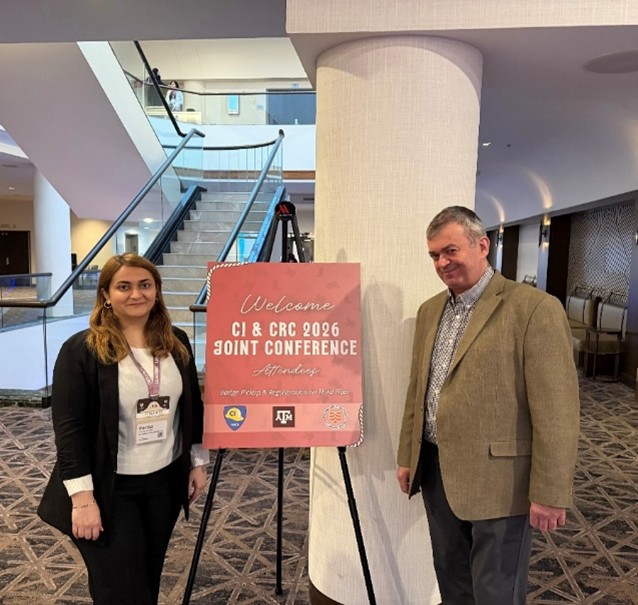
The forum host, a mechanical engineer by trade, was highly engaged, along with other professionals from across the country during the question-and-answer session. After Ms. Salehi’s presentation, many attendees expressed interest in the size of the research group, noting that nearly 400 people participated in the study. Compared with many other projects at the conference, which often included sample sizes of 20 or fewer, this may have been one of the largest control groups presented.
Overall, the research sparked meaningful discussion and demonstrated the value of examining these themes further. The project addressed multiple topics, and while many conclusions can be drawn, the conference made one point clear: the findings offer strong opportunities for future research and continued analysis.
Local 17 extends sincere appreciation to Dr. Karatas of the University of Illinois Chicago, Dr. Behzad Esmaeili and Sogand Hasanzedeh of Purdue University, and Parisa Salehi, PhD student at the University of Illinois Chicago, for their excellent work on this complex, multi-layered project. Their contributions helped advance understanding of an important industry and strengthened the value of the findings presented.
We also recognize the efforts of the International and, most importantly, the men and women—active and retired—of this great trade who participated in the research. Their involvement made this project possible, and their continued support will be essential to future efforts. This work has laid a strong foundation for expanded research, greater awareness, and continued progress in the years ahead.
Supporting Documents
